
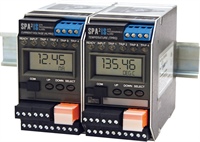
Moore Industries has released the new SPA2IS programmable alarm trips with built-in intrinsically-safe (IS) field connections. Now customers in the chemical, petrochemical, oil & gas extraction & refining and pharmaceutical industries that monitor, control, and measure signals in hazardous areas have an alarm solution that significantly reduces wiring, installation and maintenance costs. The newest member of Moore Industries' family of Limit Alarm Trips and Switches, the SPA2IS is a combination alarm trip and temperature transmitter solution that includes built-in intrinsically-safe field connections for current/voltage, resistance temperature detectors (RTDs), and thermocouple.
The IS approach as a method of hazardous area protection with monitoring and measurement instruments is increasing globally. Many industrial sites that have previously implemented explosion-proof or flameproof protection are now utilizing a hybrid approach of both protection methods in their hazardous areas. Constructing or retrofitting IS solutions within these plants can be costly and instrumentation often requires the additional purchase of a separate zener or isolating barrier and power supply.
For facilities that employ intrinsic safety measures the SPA2IS is a cost effective and complete alarm solution that includes intrinsically-safe field connections, which provides the necessary protection typically afforded by a galvanically isolated intrinsically safe barrier. In addition, the SPA2IS cuts wiring and maintenance costs by enabling users to eliminate additional barriers and power supplies, which reduces space requirements and heat dissipation or cooling considerations in barrier marshalling cabinets.
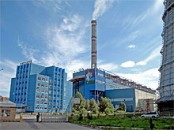 Yokogawa Electric Corporation announces that it has received an order to supply turbine control systems for thermal power plant No. 4, the largest thermal power plant in Mongolia. This 2.1 billion yen project is being undertaken to improve the efficiency of this facility's operations.
 Siemens is making it possible for utilities and power grid operators to gain deeper insights into their smart grid data. For this, Siemens has added a big data option to EnergyIP Analytics, an application that runs on Siemens' highly scalable EnergyIP smart grid application platform. The Analytics application now uses various big data options for the data-intensive processes used to administer smart meter gateways and meter data processing for external market participants on the German market. This includes the analysis of complex data patterns for the identification of energy theft, the identification of vulnerable or overloaded devices and plants in the distribution network, and the creation of load forecasts for different levels in the distribution grid based on finely granulated meter data.
 The Michelin Group has awarded a four-year contract to Rockwell Automation (NYSE: ROK) that designates the industrial automation and information company as the preferred provider to all the Michelin Group’s factories worldwide.
 “The elimination of manual operations for the measurement of OEE parameters has resulted into significant cycle time reduction. Based on the results achieved with this solution, we are considering its extension to other countries outside Europe.”
  Beijer Electronics has launched cost-effective iX TxF-2 series of HMIs, including 5, 7 and 10 inch operator interface panels designed for industrial environments.
 Yokogawa Electric Corporation announces that its subsidiary, Yokogawa (Thailand) Ltd., has received letters of intent for the purchase of control systems for 12 combined cycle cogeneration plants*1 that are to be built for small power producers (SPP)*2 in Thailand.
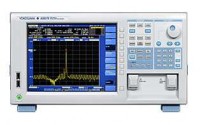 Yokogawa Meters & Instruments Corporation announces that it has developed the AQ6376 optical spectrum analyzer and will release it on February 16. The AQ6376 has a wide dynamic range and can perform precise, high resolution measurements of the optical spectrum of laser light in the 1.5–3.4 μm wavelength range. The AQ6376 is a bench-top analyzer that uses dispersive spectroscopy*1 and supports the 3-μm band, an industry first.
 Following extensive testing, leading glass container manufacturers are specifying the Rotork CMA electric actuator for a critical valve control function in the glass making process. The valves are used to control the temperature and pressure in the furnaces by regulating the air and gas mixture with extreme precision. Maintaining a constant temperature and pressure is essential for energy efficient glass making. Traditionally, the industry uses various pneumatic and electric actuators for the modulating and isolating valves involved, but has recognised the need for a more reliable and energy efficient universal solution for this application.