
 As the Industrial Internet of Things (IIoT) continues to deliver value from connecting plant-floor devices to the enterprise, security remains an ongoing challenge. Today, IT systems leverage firewalls to monitor security risks on the IT network. These IT firewalls are not aware of industrial protocols used on the plant floor – limiting the ability to minimize risk throughout the entire network. In response, Cisco and Rockwell Automation have collaborated to develop a deep-packet-inspection (DPI) technology for use in industrial security appliances.
An industrial firewall with DPI technology extends visibility down to the plant floor, enables logging of traffic patterns, and provides the opportunity for informed decision-making following a set of security policies. Users can log a range of data for any network connection or protocol, such as EtherNet/IP, including where the traffic is coming from, where it is going and with which application it is associated. While IT managers previously had this visibility, now both plant and IT managers can use this technology to more securely manage network traffic from the plant to the enterprise.
When used between industrial and cell/area zones in a Converged Plantwide Ethernet (CPwE) architecture, a plant-floor application using DPI technology has the ability to instruct a firewall to deny firmware downloads to a controller. This guards against tampering with firmware and helps protect the integrity of the operation. Only an authorized user would be able to conduct the download.
"Security on the plant floor continues to be a top concern for manufacturers and industrial operators as they build a Connected Enterprise," said Juergen Weinhofer, vice president, common architecture and technology, Rockwell Automation. "DPI technology combines our unmatched automation and information control expertise with that of Cisco, the industry leader in IT security, to enhance security for new and existing industrial control systems."
"With this security addition to our joint portfolio and architectures, we can help eliminate the ‘air gap' or ‘security by obscurity' that leads to false confidence of safety and security," said Doug Bellin, global industries lead, Cisco. "We can track all network connections in real time and react when issues arise. This is another case of the best of IT and the best of operations coming together to solve a real need."
Through the strategic alliance collaboration between Rockwell Automation and Cisco, manufacturers can benefit from the sharing of proven security best practices from the IT space made possible for the plant floor and industrial environment. DPI technology will be brought to market in industrial network devices from both Rockwell Automation and Cisco in 2016.
- See more at: http://phx.corporate-ir.net/phoenix.zhtml?c=196186&p=RssLanding&cat=news&id=2161048#sthash.xM0iDDGS.dpuf
 Siemens has equipped the latest generation of its rugged, ready-to-run industrial notebooks with a multitude of practical functions for mobile engineering. The Simatic Field PG M5 programming device has been designed with pre-installed Simatic TIA Portal (Totally Integrated Automation) engineering software for fast and efficient configuration, commissioning, service and maintenance, as well as for engineering work in technical bureaus. There are two versions of the new notebook with robust hardware for mobile use in industrial plants: The Comfort version is equipped with an Intel Core i5 processor, the Advanced version with a more powerful Intel Core i7 processor. The Advanced device can also be configured with the interfaces of the previous Simatic S5 controller generation.
 exida has released a new white paper entitled: Comparing FMEDA Predicted Failure Rates to OREDA - Estimated Failure Rates for Sensor and Valve Assemblies.
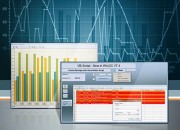 In the new Version 7.4 of the Simatic WinCC Scada software, Siemens is focusing on greater efficiency and openness. Furthermore, Simatic WinCC can now also be used with Windows 10 Professional and Enterprise. The WebUX option for the web-based operator control and monitoring using commercially available HTML5-compatible devices via the Internet has been considerably extended in its functionality. WebUX now supports all popular WinCC controls and enables objects to be made more dynamic by means of script. For the purpose of greater openness the channel to the Simatic S7 controllers has been extended and is now also enabled, for example, for large plants with up to128 S7-1500 controllers. In addition, a standard OPC UA client has been integrated in order to exchange data easily with third-party systems. For the exchange of data (iDoc) with MES (Manufacturing Execution System) and SAP systems, the WinCC IndustrialDataBridge option has been extended to include an XML file-based interface.
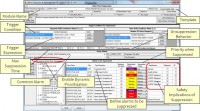 The ISA-18.2 and IEC 62682 alarm management standards provide recommended targets for average alarm rate and for alarm floods - a condition during which the alarm rate is greater than the operator can effectively manage (e.g., more than 10 alarm per 10 mins) Ref ISA-18.2. During alarm floods the chance of an operator missing an alarm or making a mistake is increased. The following table taken from IEC 61511 shows how the reliability of humans is impacted by stress.
 Rockwell Automation has recently announced it has expanded its motion control business by completing the acquisition of MagneMotion, a leading manufacturer of patented, high-performance conveyor systems with servo-controlled independent cart technology. The addition of this new offering will integrate into existing Rockwell Automation control, safety and sensing solutions to help manufacturers more safely, quickly and easily transport products and heavy loads between machines and throughout a plant.
 Schneider Electric will collaborate with four South African higher learning institutions and the French Ministry of National Education to provide state-of-the-art equipments to train disadvantaged young South Africans in the field of energy.
 Siemens is launching a new software tool on the market for the design and simulation of Profinet automation networks. The Sinetplan network planner from Siemens is aimed at plant designers, constructors and operators and supports them from the planning stage, through commissioning to the operation of a Profinet communication network. In order to ensure subsequent operational reliability and to avoid problems during commissioning, the network is already designed with a suitable topological structure at the planning stage and any possible bottlenecks caused by peak loads, for example, are simulated. In the operating phase, Sinetplan offers transparency about the network capacity up to the port level of the individual stations by means of online scans, traffic shapers or reporting functions. This prevents unnecessary downtimes due to network overload and thus increases the availability of the network and the production.