
 The Program Committee of the 2014 ISA Process Measurement and Control/Safety and Security Joint Division Symposium has issued a Call for Papers, inviting authors, innovators, thought leaders and other automation professionals in the instrumentation, communications and control system fields to submit abstracts for presentation consideration at the event. The symposium, to be held 6-9 October 2014 in Houston, Texas, USA, is a collaboration between ISA’s Process Measurement and Control Division (PMCD) and ISA’s Safety and Security Division, with additional participation by ISA’s Chemical and Petroleum Industries Division (ChemPID).
“The Houston market has so many experienced process professionals across so many different industries, and we all have critical interests in common, such as instrumentation, communication networks and control systems,” says Edward Naranjo, Ph.D., FS Eng. (TÜV Rheinland), NPDP, Global Technical Product Manager at General Monitors who serves as the Director of ISA’s PMCD Division. “Our friends in the ISA Safety and Security Division are developing a top-notch program as well, featuring sessions on safety instrumented systems, cybersecurity, and more, and these are topics that our process automation community also regards as instrumental to their operational success.”
In the specific area of safety and security, attendees will “benefit greatly from the networking opportunities, and the answers they receive straight from the members of the ISA84 (Functional Safety: Safety Instrumented Systems for the Process Industry Sector) and ISA99 (Industrial Automation and Control Systems Security) committees,” Gruhn adds.
The ISA PMCD technical program for 2014
- Automation and control systems, including sensors, control hardware and software, and final elements
- Flow technology
- Pressure technology
- Temperature technology
- Level technology
- Field calibration technology
- Instrumentation
- Smart measurements
- Process variables
2014 ISA PMCD Call for Papers topics
Suggested topics for presentation in process measurement and control include:
Instrumentation
- Variability, instrument calibration
- Automation and control systems
- Flow measurement technology
- Field calibration technology
Communications
- Communications in SIL, ISA100
- Wireless technology on the plant floor
- Field instrumentations: wireless,
- Foundation Fieldbus, and other smart technologies
- Bridging prices between SCADA and DCS
Control Systems
- Process optimization
- Fieldbus control systems with focus on higher SIL
- Control system strategies, advanced control
- Instrumentation for floating LNG facilities
- Automation and control in petroleum and petrochemical terminals
- System integrations
- Advanced HMI and alarm management
- Data and document storage in EDMS and asset management
- Troubleshooting, optimization, and application in petroleum and chemical process industries
- Safety Instrumented Systems
- Control system cybersecurity
2014 ISA PMCD Call for Papers guidelines
- Prospective authors must submit original contributions by 21 January 2014. (The lead author will serve as ISA’s main contact.)
- Abstracts must be limited to 500 words, be written in English, and be submitted online or through email.
- Final presentations must be prepared on the official ISA PMCD Symposium template.
- Papers accepted for publication and presentation will require completion of ISA’s Rights and Responsibilities Form
- Authors and speakers in attendance must pay for registration. (Visit www.isa.org/PMCD2014.)
- Papers also will be considered for publication in ISA’s technical journal, ISA Transactions
 exida, the global leader in functional safety certification for the process industries, has certified the Rosemount 5300 Series Guided Wave Radar Transmitter for functional safety, ensuring that it meets the functional safety requirements for Safety Integrity Level (SIL) 3 capability per IEC 61508: 2010.
 Yokogawa Electric Corporation has announced that its subsidiary, Yokogawa América do Sul Ltda., has received an order to supply the control system and field instruments for the São Miguel dos Campos second-generation bioethanol plant.
 Rockwell Automation has announced the Safety Maturity Index (SMI) tool, a self-guided assessment that gives manufacturers visibility into the effectiveness of their safety programs and the ability to optimize plant performance. Applicable to any industry, any plant size and any location in the world, the SMI tool helps manufacturers see where they measure in safety culture, compliance and capital. Most importantly, it provides recommendations to help achieve best-in-class safety performance.
 Technip was awarded by Sasol a contract to supply its proprietary ethylene technology and front-end engineering design (FEED) for a world-class grassroots ethane cracker. This cracker, to be located at Sasol’s Lake Charles site in Louisiana, USA, will produce an estimated 1.5 million tons per annum of ethylene.
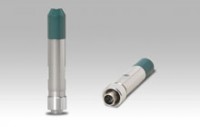 Yokogawa Electric Corporation announces that in December it will begin providing sensor manufacturers a new wireless communications module with a built-in antenna. This new module is intended for use in wireless sensors, and will be provided to companies that develop and manufacture these products. Yokogawa has already concluded a contract to license the use of this wireless technology to New Cosmos Electric Co., Ltd., a gas detector manufacturer.
 Case Study by Yokogawa: Total S. A. (Total) is a major oil and gas company with operations in more than 130 countries that span all aspects of the industry, including both upstream (exploration, development. and production) and downstream (refining, marketing, and the trading and shipping of petroleum products) operations. Total has been operating in Nigeria for 50 years and its deep-offshore oil & gas field development projects have been one of the main growth drivers in Africa. In Nigeria, the company operates through Total E&P Nigeria Limited (TEPNG) which carries out all upstream activities, including deep-offshore operations.
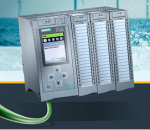 The Siemens Industry Automation division has developed a new controller for extreme environmental conditions. Siplus S7-1500 has the same performance characteristics as the newest standard controller family Simatic S7-1500 for mid-level and high-end machine and plant automation. Other outstanding features of the new controller Siplus S7-1500 are reliable operation under extreme medial loads such as humidity, corrosive vapors, salts or dusts.In an extended temperature range, the Siplus S7-1500 functions reliably during cold starts as well as in continual operation. This saves energy costs for the user because no additional air conditioning is necessary.