
 Reflecting growing demand for more general, fundamental instruction in process automation, the International Society of Automation (ISA) announces today it has developed a new course for non-maintenance personnel with little or no background in the field of process measurement and control.
ISA Process Automation Boot Camp for Non-Maintenance Personnel (PABC)—which will make its 2014 debut during the week of Monday, 31 March 2014 at ISA headquarters in RTP, NC, USA—is specifically designed for:
- Operations personnel with no instrument maintenance responsibilities, but who require a general knowledge of process automation equipment
- Automation engineers who need a basic understanding of process automation equipment, signal transmissions and process measurements
- Process control engineers who need to understand the operation of all equipment associated with the process control loop
- Process control equipment sales staff needing to learn process measurement and control and the various applications of process instrumentation
- Managers responsible for overseeing operations or maintenance personnel who need a general overview of the technology maintained by their staff
While more general in focus, this new ISA course delivers highly intensive instruction—combining select laboratory demonstrations (approximately 25% of course time) with expert-led, in-depth lecture and classroom discussion—over a full week. Considerable emphasis is placed on the physical measurement technologies, the communication signals, and the various applications of instrument equipment to achieve common process measurements and control.
Primary course objectives include:
- Providing an overview of industrial measurement, automation equipment, and equipment installation to non-maintenance personnel so that they gain a basic knowledge of instrumentation, including terminology and operation
- Outlining recommended installation practices for the most common process measurement and control equipment
- Describing measurement technologies employed by different types of measurement instruments
- Pinpointing the various communication signals and related pros and cons
- Identifying basic troubleshooting techniques to verify proper field equipment operation
To learn more about, or register for, the PABC course, visit www.isa.org/PR14/PABC
L?pning & Utbildning The ISA100 Wireless Compliance Institute announced today that Spirax Sarco, a leader in products and services for steam system solutions, has recently joined the ISA100 Wireless™ Compliance Institute.
 The EtherCAT Terminal system has proven successful over a period of many years in automation applications where a temperature range of 0…55 °C is sufficient. For requirements beyond that, the operating temperature range of selected EtherCAT Terminals and Couplers has been extended to -25…+60 °C. The storage temperature of these ET components (Extended Temperature Range) has also been adapted and is now -40…+85 °C. The exact definition of the operating conditions in temperature ranges outside 0…55 °C, any installation requirements that possibly deviate from the standard and, if applicable, deviating technical data can be found in the EtherCAT Terminal documentation.
 (Reuters) Petrofac, the international oil and gas services provider, has been awarded a contract by BP, worth $1.2 billion, for the Khazzan gas project in Oman. The scope of work will include engineering, procurement and construction of the central processing facility (CPF) at the Khazzan field. The CPF will include two process trains, each having a capacity of 525 million standard cubic feet of gas per day, Petrofac said in a statement.
 Protecting and Controlling Critical Capital Equipment in the Production Environment : A complimentary Invensys seminar for turbomachinery applications.
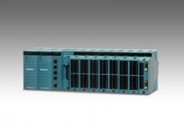 Yokogawa Electric Corporation announces that it will release an enhanced version of the FCN-RTU* low-power autonomous controller for the STARDOM™ network-based control system on February 26. This new version of the FCN-RTU has been developed to meet the requirements of our customers in the high-growth upstream oil & gas industries.
 HPCL-Mittal Energy Limited (HMEL) is a joint venture between Hindustan Petroleum Corporation Limited and Mittal Energy Investment Pte Ltd, a Lakshmi N Mittal company that is based in Singapore. HMEL has built and currently operates the Guru Gobind Singh refinery, which is located near Bathinda in India’s Punjab region. This new refinery has a production capacity of 9 million tons per annum (the equivalent of 180,000 bpd) and complies with the Euro IV emission norms. This is a zero bottom plant, with a very high Nelson Complexity Index. The refinery facilities include a polypropylene unit (PPU) that utilizes the Novolen® gas-phase polypropylene (PP) process and is capable of producing 440,000 tons per year of homo-polymer PP.
 Yokogawa Electric Corporation announces that it has received the Frost & Sullivan 2014 Global Enabling Technology Leadership Award in the wireless solutions category. The Enabling Technology Leadership Award is presented to companies around the world that are best-in-class in a specific category.