01152026Thu
Last updateSun, 04 Feb 2024 4am

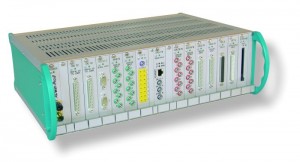
CAS DataLoggers introduces new processor board for ADwin-Pro-II Data Acquisition and Control Systems

CAS DataLoggers and Jager are proud to introduce a new processor board for ADwin-Pro-II Data Acquisition and Control Systems which has a 64-bit FPU (Floating-Point Unit) for math co-processing. The new Pro-CPU-T12 processor module offers powerful real-time computing and is largely software-compatible to previous versions. With Ethernet support enabling high-speed data transfer, ADwin’s Pro-CPU-T12 module enables standalone data recording in applications where there’s no PC or connection to one. This powerful solution is ideal for satisfying the most demanding applications including physics experiments, vibration monitoring, failure analysis, and high-speed data acquisition.

The Heart of the ADwin-Pro II System

The processor module--the ADwin CPU--is the center of each ADwin-Pro II data acquisition system. It executes the ADbasic programming instructions and accesses the inputs, outputs and interfaces of the other modules.

ADwin’s new Pro-CPU-T12 processor offers powerful Giga-performance, with a 1 Gigahertz clock, 1-Gigabyte main memory for storing code and data, and a 1-Gigabit Ethernet interface for communication to the PC. All this makes the 64-Bit double-precision FPU 5x faster than its predecessor module the CPU-T11. The T12 module also has a trigger input and 2 Digital I/Os, and as a special feature the board can also run C code embedded into ADbasic code. The module also enables stand-alone operation without a PC using the Bootloader.

Flexible Access:

Users have the choice of either USB or a SATA storage device on the module: the SATA device can either be integrated into the module or removable. Access to the memory is provided via processor module or via NFS/SMB/FTP from the Ethernet network.

ADwin data acquisition systems feature tightly-coupled analog and digital inputs along with counters to provide users’ applications with extremely low-latency operation. The ADwin-Pro II Series utilizes a modular form factor with plug-in modules to allow up to 480 analog or digital inputs in a single chassis, along with a high-performance 300 MHz DSP processor and Ethernet communications interface. Users also have a variety of other I/O options including CANbus, SSI, Profibus/Fieldbus, RS-232/485, and signal conditioner modules.

The extraordinary speed of the Pro-II system provides complex applications with a high data rate while the fast processor allows an intelligent pre-selection of relevant data, mathematical functions or digital channel filtering.

Nike

Case Study: DCS Migration takes place smoothly despite Technical Challenges

Chevron’s Ghent facility in Belgium blends Texaco branded lubricants. The plant has over fifty vessels and storage tanks, and currently produces more than fifty formulations of lubricants and viscosity index improvers by means of blending and additives. Product quality is rigorously controlled. Approximately 1,000 tests are performed weekly at the plant’s analysis laboratory. More than thirty truck shipments are made every week. The plant previously was controlled by a Unix-based Foxboro I/A series distributed control system (DCS) installed in 1997. In 2010, Chevron decided to migrate to a new platform to take advantage of new functionalities, and ensure it had a system commensurate with its strong value proposition of advanced technology.

Careful project investigation and planning allowed Yokogawa to migrate the legacy DCS at Chevron’s Ghent facility to a state-of-the-art CENTUM DCS platform. The transition process went smoothly and efficiently, overcoming a number of complex technical challenges, which included emulating complex level 3 functionality, managing capital constraints, and solving an unforeseen interfacing issue with the plant’s weighing hardware.

Download full Case Study

Nike

Yokogawa releases CENTUM® VP R5.04 Integrated Production Control System

Yokogawa Electric Corporation announces the release on this date of CENTUM® VP R5.04, an enhanced version of the company’s flagship integrated production control system. This new CENTUM release features enhanced alarm and batch functions.

The development of CENTUM VP R5.04 is the outcome of a steady effort to improve this system, which is the cornerstone of Yokogawa’s IA business’s VigilantPlant® vision. R5.04’s enhanced alarm function improves operational safety, and the enhanced batch function meets specific requirements of industries, such as specialty chemical, which is being targeted under Yokogawa’s Evolution 2015 mid-term business plan.

Enhancements:

  • Visual and audible indicators

With the CENTUM system, a prominently colored tag mark is displayed on the HMI screen next to any measurement reading that falls outside the normal range. With CENTUM VP R5.04, these colored tag marks now come in a variety of easily recognizable shapes that indicate the importance of a measurement item and the severity of an anomaly (critical, high risk, medium risk, low risk, etc.). New audible alarms have also been added to provide information on the severity and equipment location of an anomaly. Through the use of color, shape, and sound, operators can quickly and intuitively recognize the significance of a specific alarm, thereby allowing for improved operational safety

  • Highly efficient batch process engineering

With batch process*1 manufacturing, a recipe*2 must be defined for each product. A recipe consists of a procedure and a formula: the procedure is a description of particular processes such as feed and temperature control that will be employed, while the formula specifies feed quantity, temperature, and the like. While procedures and formulas are usually defined separately, it is advantageous in certain batch applications if both can be defined together on the same screen. The CENTUM VP R5.04 batch function has been enhanced by adding this capability, and this allows end users to efficiently perform the engineering required for each definition method.

Applications:

Monitoring and automatic control of plant operations

1. A widely used process in the chemical pharmaceutical, and other industries by which fixed quantities of a product are produced through the injection of feedstocks in a predetermined order and the mixing of these materials to produce a desired reaction (such as polymerization). Equipment settings and procedures are defined for each product.

2. This defines the manufacturing process for a specific product, specifying the requirements for items such as equipment, formulas, and procedures.


Miesten kengät laajasta valikoimasta

KEPServerEX version 5.15 integrates new Omron NJ Ethernet Driver and updated BACnet/IP Driver

Kepware Technologies, a software development company focused on communications for automation, today announced major product updates to KEPServerEX version 5.15. The release demonstrates Kepware's unwavering commitment to communications standards and support of industry-leading hardware manufacturers. The updates are particularly relevant to customers in the Manufacturing, Building Automation, and Energy Management markets.
KEPServerEX version 5.15 introduces the Omron NJ Ethernet Driver to its Omron Server Suite. The industry's only native driver, it provides connectivity to Omron Sysmac NJ controllers, utilizing the EtherNet/IP protocol for fast and robust communications. Recognized by Omron as a Vendor Endorsed Protocol, the driver enables unimpeded communications to HMI, MES, and other client applications through the KEPServerEX communications platform.

"The Sysmac NJ controller is Omron's flagship machine control platform, designed to advance the industry by integrating logic, motion, vision, safety, robotics, and database connectivity into a single architecture," said Matt Trowbridge, Director of Marketing at Omron Automation & Safety. "In this high-performance market space, it was important for us to partner with a leading OPC provider to create reliable and scalable solutions for customers using our machines in their industrial applications. Kepware was selected to be Omron's recommended OPC provider with the industry's only native driver to the Sysmac NJ controller, leveraging the built-in EtherNet/IP protocol in order to streamline communication."

KEPServerEX version 5.15 also features major enhancements to the BACnet/IP Driver to support schedule and calendar objects for the Building Automation and Energy Management markets. The driver supplies data access to clients outside of typical Building Automation clients, including HMI, SCADA, Historian, and Enterprise applications that support OPC standards.

"Kepware is committed to developing products that meet the evolving needs of our customers," said Tony Paine, CEO, Kepware. "KEPServerEX version 5.15 is no exception. Its new capabilities are a response to increasing customer requests for support of leading hardware providers and technologies like Omron and BACnet. We are confident that our latest release will have a significant and positive impact on the industry."

In addition to the Omron and BACnet drivers, KEPServerEX version 5.15 includes updates to 28 of its supported drivers and plug-ins, including AES Version 3 encryption support for the SNMP Driver. Kepware also recently released ClientAce version 4.0.2.6, a .NET developer toolkit that enables applications programmers to design custom OPC clients. Maintaining its highly intuitive drag and drop development style, ClientAce now includes support for Visual Studio 2013 and .NET 4.5 Framework.

Nike Odyssey React

Rotork CVA delivers accurate pressure control for city’s water supply network

Rotork’s innovative CVA electric control valve actuators are enabling the Sydney Water Corporation in Australia to control the pressure in the city’s water supply network with greatly increased response and accuracy.

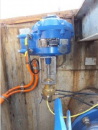
Water authorities need to control the supply pressure in their potable water pipeline networks throughout the day in response to user demand. Pipeline pressure also needs to be controlled to reduce network water leaks and to mitigate pipe bursts and consequential expensive repairs. To perform this vital function on the Sydney water supply network, Rotork Australia has supplied more than 150 Rotork CVL500 linear control valve actuators with adaptation for fitting to pilot valves.

Typically, spring pressure in a pilot valve is modulated over a short 1 – 4mm stroke; this controls the output of the pilot valve, which in turn controls the pipeline pressure. Network pressure can range from 15 metres to over 90 metres head. The characteristic of the Rotork CVL500 actuator enables very accurate control of the network in increments of 0.4 metres of head pressure. For the Sydney Water network this is an improvement on the previous coarse control resolution of up to 7 metres head, just by changing to the Rotork CVL500 actuator. Using a PID* control loop, the Rotork CVL500 provides repeatable and reliable ongoing pressure control.

The Rotork CVL500 actuator can operate in a flooded pit, as the enclosure is IP68 rated, whilst only low power 24V DC or 240V mains is needed. The CVL500 uses Bluetooth® to enable remote configuration and monitoring from outside the pit or confined space. With the integral manual override control the CVL500 allows operation with or without power by electrical and mechanical engineers as well as site operators.

The Rotork actuators were supplied to NetWorks Alliance, a collaboration formed by Sydney Water to deliver a programme aimed at reducing leaks and main breaks from the city’s 21,000 km water supply network. The Alliance provides integrated design-construction of renewals and other water and sewer works across Sydney Water’s area of operations.

Air Jordan News

Major Refinery uses Ultrasonic Fiscal Metering system

Case Study by Emerson: Reliance Industries Ltd., ranked 99th on the Fortune 500 list of the world’s major corporations, operates the largest refinery and petrochemical complex. Located in Jamnagar, Gujarat, India, this refinery processes 1.24 million bpd (MMbpd) of crude oil. Largely due to this facility, Jamnagar has emerged as one of the world’s refining hubs. This refinery features the world’s largest crude distillation, fluid catalytic cracking, delayed coking and paraxylene (PX) units. The complex involves the operation of 50 various processing units to produce PX, ethylene, polyethylene, polypropylene, transportation fuels (diesel, gasoline and aviation fuels), and many other products.
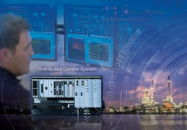
Refinery achieve greater measurement accuracy and ultra-reliability with new 3410/3810 Series Electronics that are now available with all Daniel Gas and Liquid Ultrasonic Flow Meters.  3410/3810 Series Electronics offer:

  • Speed: Enables operators to detect changing flow dynamics in real time before measurement is adversely affected.
  • Reliability: Less components and interconnections simplify troubleshooting and reduce maintenance time.
  • Stability: Maintains accuracy and repeatability over the life of the meter.
  • Ease of Use: Simplifies installation, configuration and ongoing maintenance of the meter.

Download complete Case Study

Off White X Max 180-90

Yokogawa obtains ISASecure® EDSA Certification for CENTUM® VP Production Control System

Yokogawa Electric Corporation has announced that its CENTUM® VP production control system has obtained the ISASecure® Embedded Device Security Assurance (EDSA) certification from the ISA Security Compliance Institute (ISCI).

Cybercrime and cyber warfare are on the rise worldwide, and are growing ever more sophisticated. Recent prominent cases of industrial sabotage and espionage have escalated these concerns. Companies in the oil, petrochemical, power, and other industries are increasingly vigilant about such intrusions, and are being careful to check a product’s cyber security features before purchasing it. To assure customers of the high reliability of its products, Yokogawa obtained the ISASecure EDSA certification for the CENTUM VP production control system through a process that involved an examination by the CSSC (Control System Security Center) Certification Laboratory. This is the second Yokogawa product to receive ISASecure EDSA certification; the ProSafe®-RS safety instrumented system received the same certification earlier this year.

Nobuaki Konishi, vice president of the PA Systems Business Center in Yokogawa’s Industrial Automation Platform Business Headquarters, had the following to say about this development: “Yokogawa is continually striving to provide its customers optimum security solutions for their control systems by such means as developing highly secure systems and instruments and providing operational support services." He went on to say, “Yokogawa aims to strengthen its relationships with customers by demonstrating the reliability of its security solutions.”

The ISCI promotes various security evaluation initiatives and is comprised mainly of ISA members. The ISASecure program has been developed by the ISCI with the goal of accelerating the industry-wide improvement of cyber security for industrial automation and control systems (IACS). It achieves this goal by offering a common industry-recognized set of device and process requirements that drive device security, simplifying procurement for asset owners and device assurance for equipment vendors. The ISASecure EDSA certification has three elements: communication robustness testing (CRT), functional security assessment (FSA), and software development security assessment (SDSA), and is based on the IEC 62443-4 standard.

Nike Blog

Foster Wheeler-Led JV awarded Feed Contract for Nafusah Onshore Oilfield Development in Libya

Foster Wheeler AG (Nasdaq:FWLT) announced today that a subsidiary of its Global Engineering and Construction Group, in joint venture with Taknia Libya Engineering Company (Taknia), has been awarded a front-end engineering design (FEED) contract by Nafusah Oil Operations B.V. Libyan Branch for an onshore oilfield development, known as the Area 47 Development Project in Libya. Area 47 (North Hamada Field) is located in the Hamada region, approximately 200 km south of Tripoli, in the Ghadames Basin.
The Foster Wheeler contract value was not disclosed and will be included in the company’s second-quarter 2014 bookings.

The planned development will consist of approximately 34 producing wells, including eleven existing wells and approximately 23 new wells, flow-lines and a common gathering trunk-line to transport the well fluids to the central gas oil separation facility for primary treatment. After separation, the oil and gas produced will be exported through new pipelines that will be connected into existing pipelines carrying products to the Mellitah delivery terminal, in the northwest of Libya, on the Mediterranean Sea, for export. The planned design capacity of the gas oil separation facility is 50,000 barrels per day (BPD) of oil, 90 million standard cubic feet per day of gas and associated water (to be re-injected into the reservoirs).

“Foster Wheeler has been involved in the Area 47 Development Project for some time, having completed the conceptual study in 2012 and worked on the FEED definition in 2013,” said Roberto Penno, Chief Executive Officer, Foster Wheeler Global Engineering and Construction Group. “Area 47 is located in a relatively remote part of Libya, so the facilities are being designed on a modular basis in order to minimize on-site construction and installation activities, and to accommodate future expansion.”

“Taknia Libya Engineering Company looks forward to the joint execution of this FEED project with Foster Wheeler,” said Tayeb Said, Managing Director, Taknia Libya Engineering Company. “We hope this partnership will open the door for more co-operation between the two parties to execute more projects in the Libyan market and more significantly help enhance the technology transfer program that Taknia is implementing.”

“To achieve first oil production by the end of 2016, Nafusah is looking forward to have this FEED project completed on schedule or even before in order to start the second phase of the project as early as possible in 2015,” said Mohamed Jamaleddin, Chairman of the Operating Management Committee, Nafusah Oil Operations B.V. Libyan Branch. “We trust that the in-depth technical expertise of the Foster Wheeler and Taknia joint venture will ensure the successful and safe delivery of a high quality project for Nafusah.”

Nafusah Oil Operations was formed as a joint operating company by PT Medco Energi Internasional, through its subsidiary Medco International Ventures Limited (MedcoEnergi), of Indonesia, with its partners, the National Oil Corporation of Libya and the Libyan Investment Authority. Nafusah Oil Operating Company will act as the operator for the development and production phases of Area 47.

Air Jordan XI 11 Kid

NI System on Module Helps Engineers Develop Embedded Systems Faster, With Less Risk

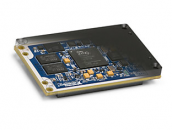
NI (Nasdaq: NATI), the provider of solutions that enable engineers and scientists to solve the world’s greatest engineering challenges, today announced the NI SOM. It combines the Xilinx Zynq All Programmable system on a chip (SoC) with supporting components such as memory on a small PCB and features a complete middleware solution and ready-to-go Linux-based real-time operating system (RTOS) already integrated. The NI SOM gives design teams the customizability of a SOM without the increased time and risk of developing custom software.

“We have evaluated several SOMs and embedded SBCs, and there is no comparison to the software integration offered by NI,” said Sebastien Boria, R&D mechatronics technology leader at Airbus. “We estimate that our development costs with the NI SOM are a tenth of the costs of alternative approaches because of the productivity gains of NI’s approach to system design, in particular to NI Linux Real-Time and LabVIEW FPGA.”

The NI SOM enables design teams to deploy reliable, complex embedded systems faster because it is based on and has the same rigorous design standards as the LabVIEW reconfigurable I/O (RIO) architecture. This architecture has already been used in high-reliability applications such as unmanned aerial vehicles and cataract surgery machines.

“Today’s embedded monitoring and control applications are more complex than ever before, and tighter deadlines and rising costs only increase stress for system designers,” said Jamie Smith, director of embedded systems marketing at NI. “Studies show that design teams using the LabVIEW RIO architecture can solve complex embedded problems in half the time compared with traditional custom design approaches.”

Product Brochure

adidas Laufschuhe und Laufbekleidung kaufen